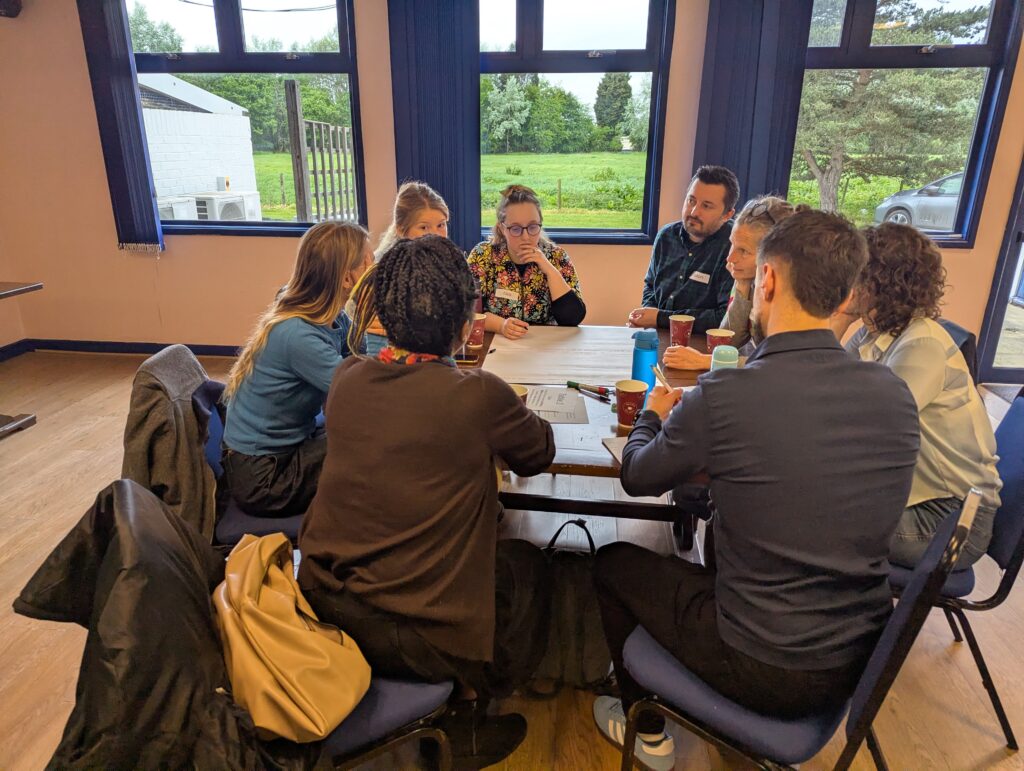
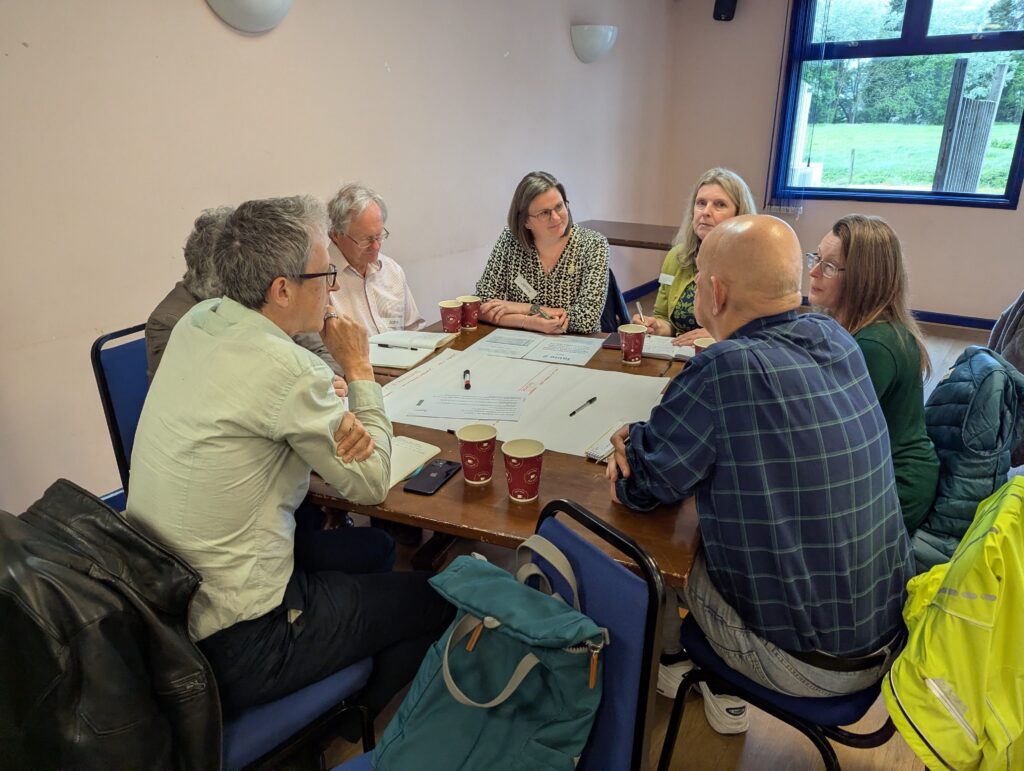
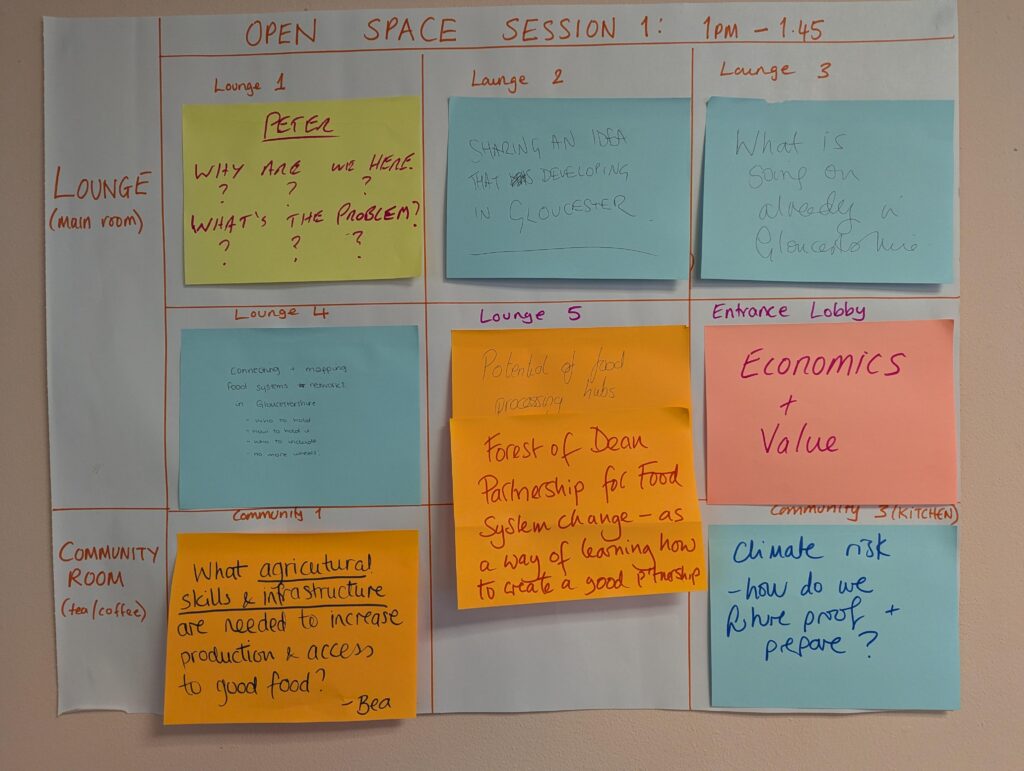
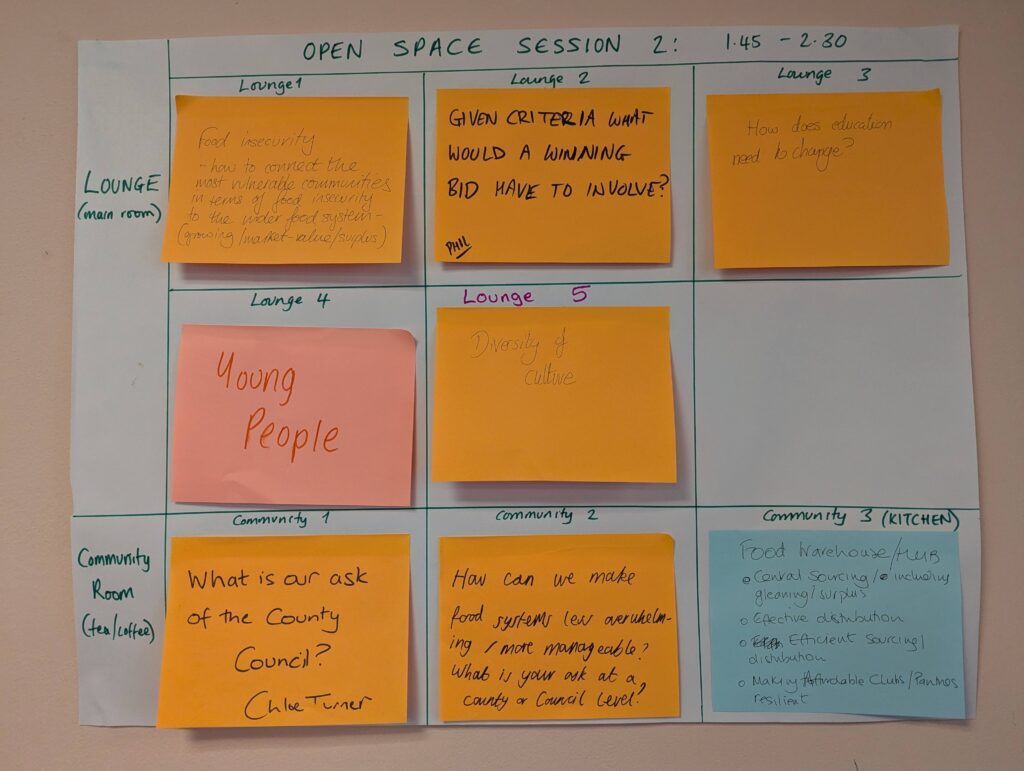
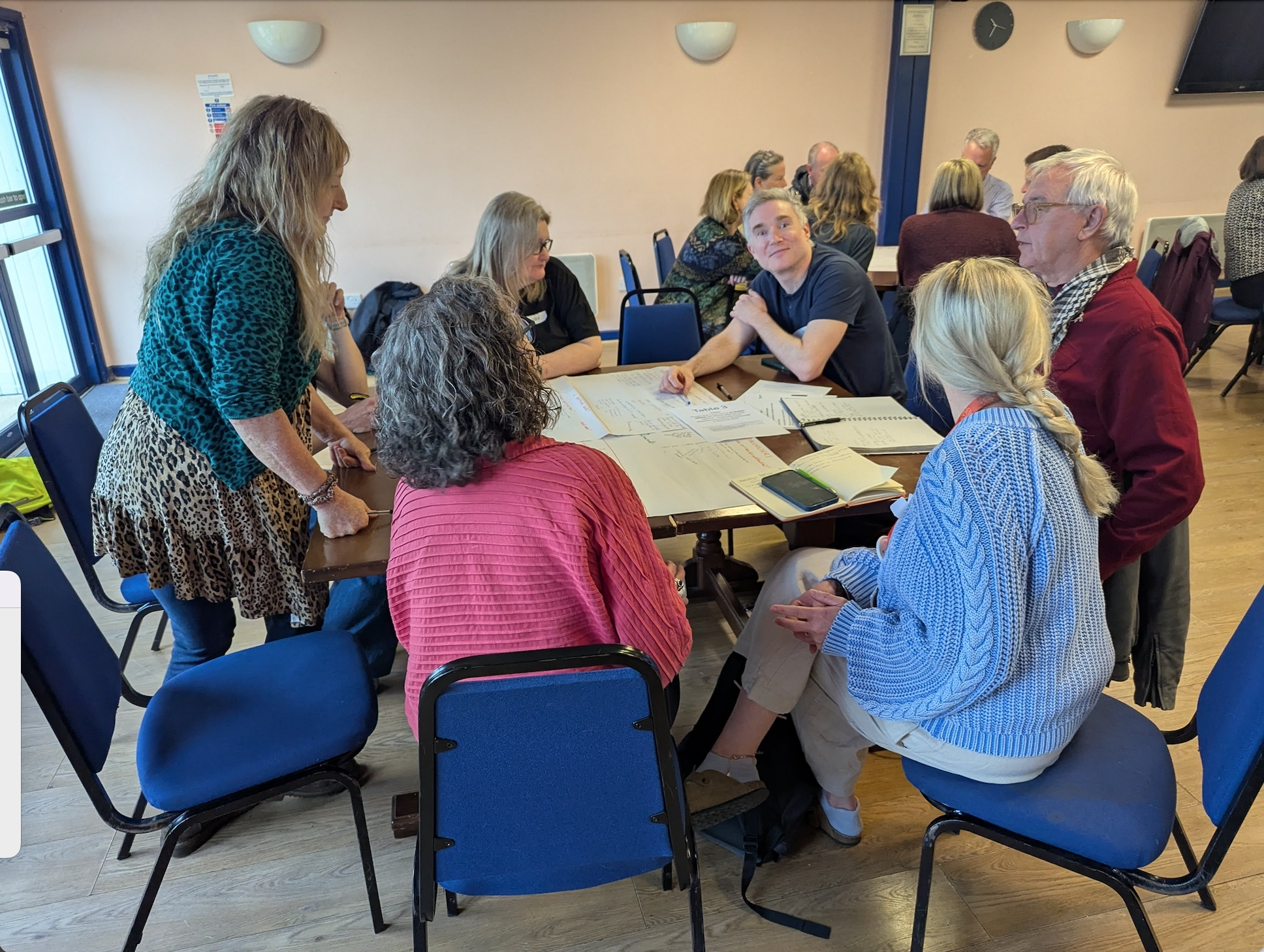
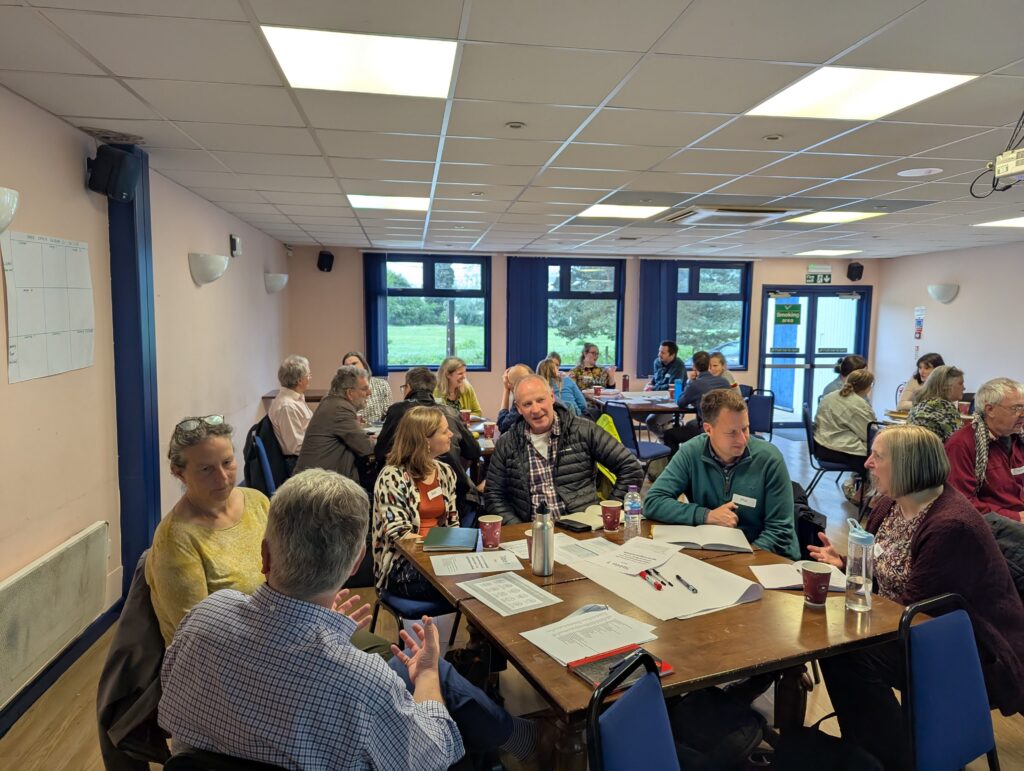
In April, we co-hosted a county-wide Ideas Exchange in partnership with the Gloucestershire VCSE Alliance and the Gloucestershire Food and Farming Partnership (GFFP). The workshop brought together 40 partners from across our food system including farmers, community organisers, and local authority representatives to explore how we can work together to transform Gloucestershire’s food system.
This conversation comes at a critical time. With rising food insecurity, cost-of-living pressures, and increasing climate change impacts, there is growing pressure on how food is produced and accessed locally. At the same time, many organisations working to address these challenges are operating with limited funding and capacity. A more resilient, localised, and fair food system is needed now more than ever.
Recognising our foundations
One of the clearest messages from the day was that we aren’t starting from scratch. Gloucestershire already has brilliant food projects and dedicated people working hard to improve access to food and build local resilience.
From the community dining initiatives and school meal innovations to the vital distribution networks and field-to-hub gleaning projects, the foundations of a strong county food system are already in place. The next step is connecting these individual assets to create a coordinated, county-wide system that works for everyone.
Key themes for system change
Through “Open Space” and “World Café” sessions, several priority areas emerged for the county:
Infrastructure and Land: To make local food viable, we need local processing and storage solutions. We also discussed the need to better match available land with both new growers and specific community needs.
Community Food and Access: A major focus was placed on how to increase access to affordable food by expanding dignified, community-based food support through local hubs and improving access for our rural areas.
Policy and Skills: We explored how to integrate food resilience into local planning and public health strategies, alongside linking schools and communities to food production, and upskilling the next generation in regenerative farming.
Finance and Investment: The need for more flexible and long-term funding models was highlighted, including blended finance approaches and support for community-led food enterprises.
Stronger Coordination: There is a need for a “backbone” function to help us share data, avoid working in silos, and collaborate on large-scale funding opportunities.
The road ahead
The day highlighted the importance of developing a shared vision and a long-term food strategy for Gloucestershire. It also showed strong appetite for collaboration, which will be essential to turn ideas into meaningful system change.
This was the start of a bigger conversation about how we build a fairer, more connected, and resilient food system – not just through funding, but through the trust and relationships we continue to build across sectors and communities. We look forward to reconvening for facilitated planning sessions soon.
· Download the Ideas Exchange Summary Report
· Download the Full Workshop Report
We will share updates as we take the next steps.