
Helping local authorities, businesses and organisations take simple actions to tackle the climate and nature emergency through food.
Author: Sarah Avery
Food Citizenship
We believe that we all have the power to make a positive change in our food systems, and that we should all have access to affordable, healthy and sustainable food.
Feeding Britain Webinar: Cooking activities alongside food provision
Looking at cooking activities alongside affordable food networks.
Feeding Britain – Resource library for food projects
This site contains example documents and resources for food projects across the Feeding Britain network.
Feeding Liverpool
Feeding Liverpool is the city of Liverpool's food alliance, connecting and equipping people and organisations to work towards good food for all.
Feeding Britain
Feeding Britain is an award-winning charity with a vision of a UK where no one goes hungry
Food Poverty in the South Cotswolds
Cirencester Foodbanks Report for 2022 - 2023

Enrich – Practical Tools for a Healthier Lifestyle
Your health and wellbeing journey for a healthier, happier you -every Tues from 11am - 1pm at St Marks Church Hall, Cheltenham, GL51 7AL
Hidden Hardship: Everyday Experiences, Coping Strategies, and Barriers to Wellbeing in Rural Britain
A new participatory research project by Dr Stephanie Denning at Coventry University funded by the British Academy and Leverhulme Trust has sought to better understand: people’s experiences of rural hardship, coping strategies, and barriers to improved wellbeing.
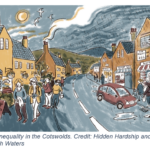
What did the research find?
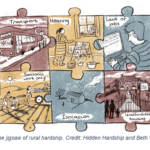
The research found that hardship can be defined as struggle and tough times, reflecting daily struggle more than one-off ‘emergency’ situations. Rural hardship is not the same as urban hardship. The causes of rural hardship can be summarised as ‘lacks of’ including government support and investment, employment, transport – the jigsaw illustration further illustrates this.
In people’s coping strategies, huge importance was given to informal support networks with friends and families, in addition to support offered by local groups although these could be difficult to access with limited transport options and a fear of stigma.
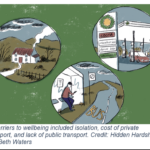
Barriers to improved wellbeing were to some degree perceived as outside of people’s control, which makes it difficult for people to envisage hardship improving. These included the ‘lacks of’ such as problems with transport, lack of government support and investment, and stigma/shame linked to inequality.
Hidden Hardship research recommendations:
The research’s Report for Policymakers and Community Leaders concludes with five recommendations which are summarised here: (see the full report for more details)
1. There need to be more tailored national government and national voluntary sector responses to rural hardship.
2. More government and voluntary sector support is needed for individuals experiencing daily rural hardship including within the welfare state to address the high cost of rural living.
3. Rural residents need support accessing transport to get to medical appointments at GP surgeries and hospitals with local GP practices/branches re-opening and/or staying open.
4. Local organisations and leaders (including Church leaders) should raise awareness in the general population in rural areas such as the North Cotswolds that people are experiencing hardship, and sensitively give a voice to people experiencing hardship to share their experiences.
5. The ‘lacks of’ that cause and affect rural hardship need to be addressed in local and national government planning, notably public transport/infrastructure, affordable housing, and amenities.
Want to know more?
• Visit the project website for more information including the full Report for Policymakers and Community Leaders and accompanying 2 page briefing
• Email the project lead Dr Stephanie Denning
Hidden Hardship: Everyday Experiences, Coping Strategies, and Barriers to Wellbeing in Rural Britain
This report is written for national and local policymakers and community leaders to better understand hardship in the North Cotswolds: experiences of rural hardship, coping strategies, and barriers to improved wellbeing.